
$109.89
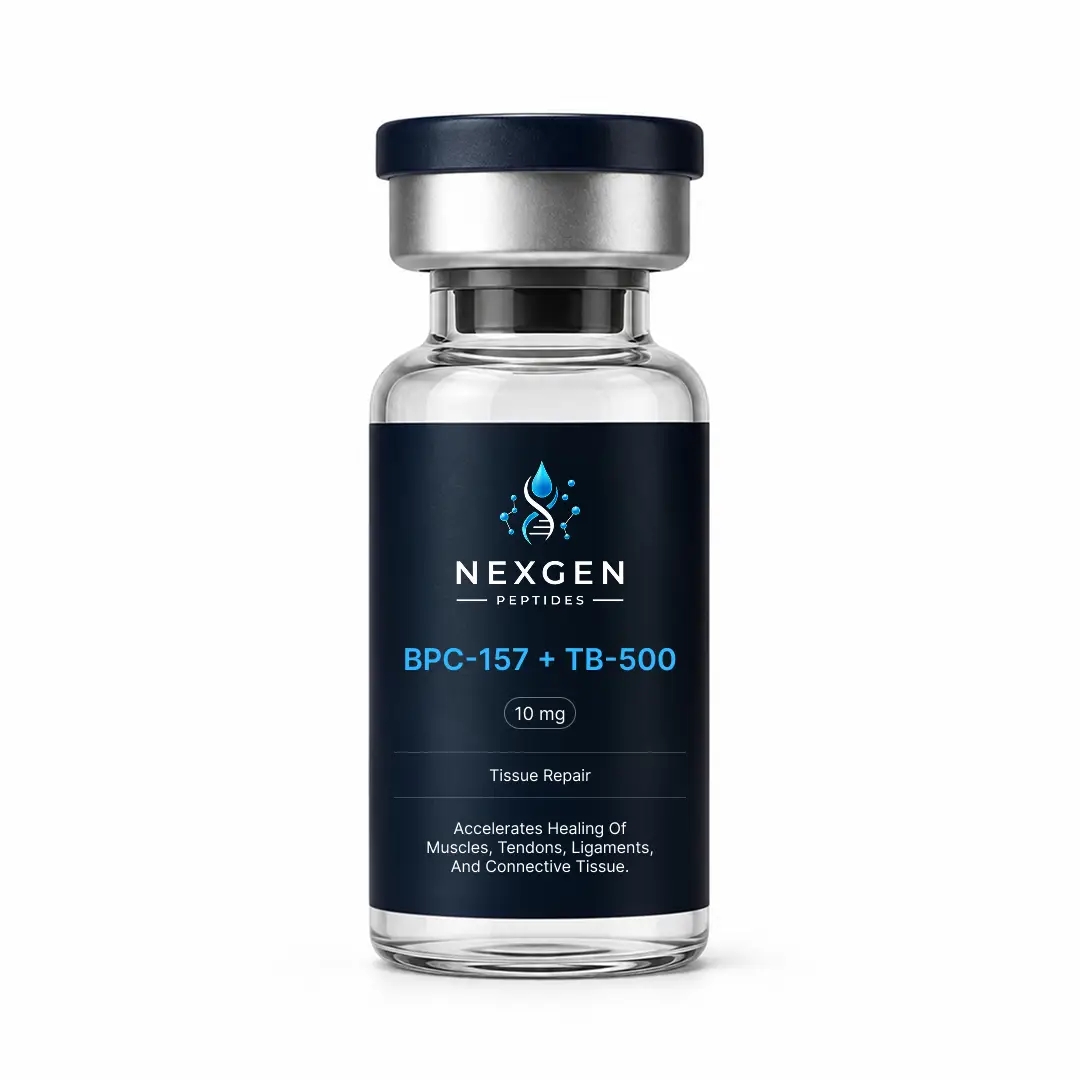
BPC-157 + TB-500 is a combined peptide research product developed for controlled laboratory investigation of cellular migration, angiogenic signalling, connective-tissue models, and tissue-remodelling mechanisms.
For laboratory research only. Not for human or veterinary use.
20 in stock
BPC-157 + TB-500 is a laboratory research peptide blend that combines BPC-157 and TB-500 within a single research formulation. Together, these peptide compounds have attracted scientific interest in experimental research involving cellular migration, vascular signalling, tissue remodelling, and connective-tissue biology. In particular, researchers have investigated related cellular pathways through laboratory and preclinical models designed to examine peptide activity and biological mechanisms.
Furthermore, researchers can use peptide research materials such as this blend to support controlled investigations into cellular responses and molecular interactions. However, laboratory findings require careful interpretation because experimental results can vary according to the research model, methodology, concentration, experimental conditions, and other study parameters. Therefore, researchers should evaluate observations within the specific context of each experimental design rather than applying findings broadly to human health.
BPC-157 is a synthetic pentadecapeptide that researchers primarily investigate in preclinical research models. Historically, experimental studies have examined BPC-157 in relation to cellular and tissue-associated processes. For example, researchers have explored its activity in models involving tendon fibroblasts and injured tendon tissue.
Additionally, laboratory research has examined BPC-157 in connection with cellular signalling and tissue-related pathways. Nevertheless, much of the available evidence comes from laboratory and animal studies rather than established human clinical use. For this reason, researchers should distinguish between preclinical observations and evidence from well-established human clinical studies.
Moreover, experimental findings do not automatically demonstrate that a commercial BPC-157 research material will produce the same results across different models. Instead, researchers should assess the compound according to the specific experimental question, analytical method, and research environment.
TB-500 relates to research involving thymosin beta-4, a peptide that researchers have studied in several biological contexts. In particular, research involving thymosin beta-4 has examined mechanisms associated with actin regulation, cell migration, and tissue-related cellular processes.
Similarly, experimental research has investigated cellular pathways associated with peptide-mediated signalling and migration. However, findings involving naturally occurring thymosin beta-4 should not automatically apply to a commercial TB-500 research product. Consequently, researchers should clearly distinguish between evidence concerning thymosin beta-4 and evidence generated specifically from TB-500 materials.
In addition, researchers should consider product identity, analytical characteristics, storage conditions, and experimental methodology when evaluating TB-500 within a laboratory setting. As a result, appropriate documentation and controlled experimental procedures can help researchers interpret their findings more consistently.
Moreover, NexGen Peptides BPC-157 + TB-500 provides researchers with a defined research blend for controlled laboratory investigations. Depending on the experimental objective, researchers may investigate the material in areas involving peptide behaviour, cellular processes, connective-tissue models, and related biochemical pathways.
Potential research areas include:
For example, researchers may examine fibroblast migration within an appropriately controlled experimental model. Likewise, research teams may investigate cellular signalling pathways associated with connective-tissue models. Furthermore, analytical studies may evaluate peptide stability or interactions under defined laboratory conditions.
At the same time, researchers should avoid interpreting an experimental observation as evidence of a therapeutic outcome. Instead, each result should remain connected to the specific research model and methodology used to generate it. Therefore, laboratories should document experimental conditions carefully and apply suitable analytical controls when evaluating the blend.
When evaluating a research peptide blend, laboratories should consider product identification, available analytical documentation, batch information, quality controls, storage requirements, and suitability for the intended research application. In addition, researchers should establish appropriate handling and analytical procedures before incorporating the material into an experimental workflow.
Furthermore, laboratories can improve research consistency by maintaining clear records of experimental conditions, sample handling, analytical methods, and observed results. As a result, researchers can better compare findings across experimental runs and identify factors that may influence their observations.
Similarly, researchers should consider the characteristics of the experimental model when interpreting results. For instance, an observation from an in-vitro cell model may not reflect the same behaviour within a more complex biological system. Accordingly, researchers should avoid extending laboratory observations beyond the scope supported by the underlying evidence.
Importantly, BPC-157 + TB-500 should remain within an appropriate laboratory research context. This product does not represent a cosmetic formulation, dietary supplement, medicine, or therapeutic treatment. Rather, researchers should use the material for lawful scientific investigations involving peptide compounds and related biological processes.
In particular, researchers should not promote this product as a means of accelerating healing, repairing injuries, improving muscle recovery, or delivering performance-enhancing benefits. Such claims would extend beyond the appropriate scope of an unapproved laboratory research material. Therefore, laboratories and research teams should describe experimental findings objectively and avoid unsupported medical or performance-related conclusions.
Nevertheless, the blend may provide researchers with a useful material for controlled studies involving peptide interactions, cellular signalling, migration-related pathways, and connective-tissue research models. Ultimately, the value of any experimental observation depends on the research design, analytical methodology, controls, and interpretation applied by the research team.
| Product | BPC-157 + TB-500 Blend |
|---|---|
| Quantity | Add the verified amount of each compound |
| Research Category | Connective-Tissue Research |
| Format | Laboratory Research Material |
| Intended Use | Controlled in-vitro, analytical, or preclinical research |
| Restriction | Not for human or veterinary use |
BPC-157 and TB-500 appear among examples of unapproved peptide products identified by the TGA. Accordingly, this blend supports lawful laboratory research only. Furthermore, researchers should not use or promote it as a medicine, injury treatment, performance-enhancing product, or veterinary product in Australia.
For research purposes, laboratories should handle the material according to appropriate procedures and applicable requirements. In addition, researchers should maintain suitable documentation and apply appropriate laboratory controls throughout their investigations. Ultimately, BPC-157 + TB-500 remains a research material intended for controlled scientific investigation rather than human or veterinary use.
| Type | NON-TB-500 Peptide Blend, TB-500 Peptide Blend |
|---|
Lorem ipsum dolor sit amet consec contes quisque urna molestie tincidunt aliquet quam. Imperdiet at pellent esque vitae aliquet tempor eget rutrum tellus.


Reviews
There are no reviews yet.